Understanding Edgebander Adhesives: PUR, EVA, Hot Air & More
About the Author: YANG is a Senior Adhesive Technology Engineer with over 15 years of experience in hot melt formulation and edgebanding line optimization for furniture and woodworking manufacturers across Asia, the Middle East, and Europe.
If you run a panel furniture or cabinet line, picking between PUR, EVA, and hot air systems affects your cost per linear meter, your line speed, and how many boards get rejected for black spots. This guide answers the question buyers ask most: which edge banding adhesive fits my machine, my substrate, and my budget? We focus heavily on high-temperature EVA edge banding adhesive, a thermoplastic hot melt built for medium- to high-speed edgebanders running MDF, particleboard, PVC, veneer, and melamine strips. You will get side-by-side technical data, real factory numbers, and a supplier checklist you can use this week.
What Is High-Temperature EVA Edge Banding Adhesive?
High-temperature EVA edge banding adhesive is a thermoplastic hot melt glue used to bond PVC, ABS, melamine paper, thin veneer, or wood strips onto MDF and particleboard panels. It melts in a glue pot, gets rolled onto the panel edge, and sets fast enough to keep pace with automatic edgebanders. The word "high-temperature" describes the processing range and the heat resistance grade. It does not mean the glue stays solid at every high temperature you might encounter in a warehouse or truck.
Here is what buyers need to confirm before comparing suppliers.
- Processing temperature and viscosity move together. Most high-temperature EVA edge banding adhesive grades run a roller temperature of 180–200°C and a melter tank temperature of 170–190°C. Viscosity commonly sits between 52,000 and 72,000 cps at 200°C, which matches the TECHNOMELT EVA KS 3925 specification. A mismatch between viscosity and roller speed causes stringing or a starved glue line.
- Softening point sets the heat ceiling for the finished panel. A softening point of 95–105°C gives reasonable protection against summer heat inside a factory or a delivery truck, though PUR still wins on long-term heat and moisture resistance once it fully cures.
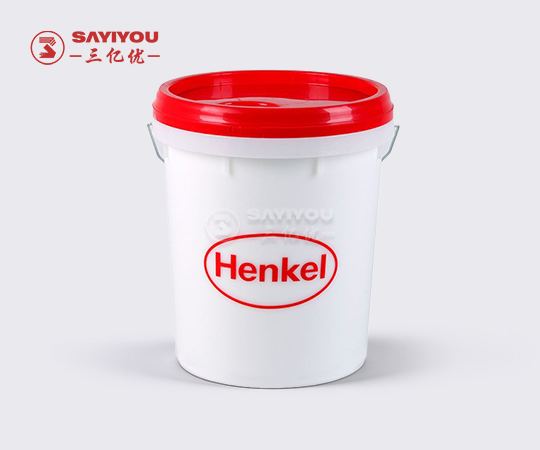
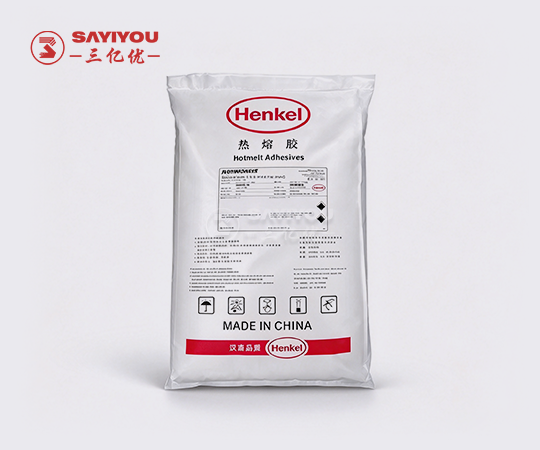
- Appearance and packaging affect handling. Light-yellow granules packed in 25kg bags are standard for this category, and consistent granule size reduces gun jams and feeding problems on automatic lines.
- Zero solvent and zero formaldehyde matter for compliance. Buyers shipping into the EU or selling to brands with strict indoor air standards should confirm the formulation is solvent-free and formaldehyde-free in writing, not just verbally.
- Open time and setting speed decide your top line speed. If open time is too short for your machine's feed rate, the edge band lifts before pressure rollers finish their pass, which is a common complaint among factories running older machines at new speeds.
These points cover roughly 80% of the questions we get from small and mid-size factory owners before they place a first trial order.
What Adhesive Types Are Used in Modern Edgebanders?
What Is Edge Banding Adhesive?
Edge banding adhesive is a bonding material that attaches a decorative or protective strip to the raw edge of a panel. It has to wet both surfaces, build tack fast, and hold through trimming, sanding, and years of daily use in a kitchen or office. A weak bond shows up months later as a lifted corner or a gap you can slide a fingernail into.
Main Adhesive Categories
Edgebander operators mainly choose from a short list of chemistries, and each one changes how the machine is set up and maintained.
- EVA hot melt adhesive, including standard grades and high-temperature EVA edge banding adhesive, is the most common choice on mid-volume furniture lines because it is affordable and easy to reheat if something goes wrong.
- PUR reactive hot melt adhesive cures through a reaction with air moisture, so it needs tighter humidity and cleaning control but delivers stronger long-term bond performance.
- Polyolefin hot melt adhesive offers a cleaner working profile and can suit certain low-energy surfaces where EVA struggles to wet properly.
- Pre-glued hot air edge banding skips the glue pot entirely, using a functional layer built into the edge strip itself.
- Solvent-based or water-based systems show up in a few specialist applications but are far less common on standard automatic edgebanders today.
Technical Data to Request From Your Supplier
Before you approve any adhesive, ask for a spec sheet that lists chemical base, appearance, application temperature, softening point, viscosity, open time, setting time, heat resistance test conditions, color, packaging, and shelf life. A supplier who cannot produce this document quickly is telling you something about their internal quality system.
Difference Between PUR, EVA, and Polyolefin Adhesives
EVA vs PUR vs Polyolefin: Core Differences
| Criteria | High-Temperature EVA | PUR | Polyolefin |
|---|---|---|---|
| Bond mechanism | Thermoplastic solidification | Hot melt application, then moisture curing | Thermoplastic solidification |
| Moisture resistance | Moderate to good | Generally very high after cure | Good, formulation-dependent |
| Heat resistance | Moderate to high | High after full cure | Moderate to high |
| Setting speed | Fast | Fast initial grab, slower full cure | Fast |
| Equipment demands | Straightforward | Needs moisture control and cleaning routine | Similar to EVA |
| Reworkability | Easy to rework with heat | Limited once cured | Reworkable with heat |
| Typical cost | Low to moderate | Moderate to high | Moderate |
| Best fit | High-volume furniture, general edge banding | Humid or heavy-duty applications | Specific low-energy substrates |
High-Temperature EVA Edge Banding Adhesive Properties
Factories that switch to a proper high-temperature EVA edge banding adhesive usually notice five things right away: a higher melting point, stable viscosity at the machine's set temperature, faster setting, strong initial grab, and consistent wetting across MDF, particleboard, and coated panels. Low-carbonization behavior matters just as much, because glue that scorches inside the pot leaves black flecks on light-colored boards, and that is a direct rejection cost.
When Polyolefin or PUR May Be a Better Fit
EVA is not the right answer for every job. Continuous high humidity, kitchen or bathroom cabinets near sinks, very high service temperatures, or difficult low-energy surfaces usually call for PUR or a specific polyolefin grade. If your factory ships mainly standard bedroom or office furniture, EVA covers most of that volume at a lower running cost.
How Does Hot Air Edgebanding Work Without Glue?
Pre-Glued Edge Banding and the Functional Layer
Hot air edge banding uses a strip with a thermoplastic functional layer already built into its back side. A hot air generator softens that layer on contact, and the strip bonds directly to the panel without a separate glue pot or nozzle system.
Hot Air Process Steps
The process follows a fixed sequence on most machines built for this method.
- Panel edge preparation and dust removal
- Edge band positioning against the panel
- Controlled hot air activation of the functional layer
- Pressure bonding through rollers
- Trimming, scraping, and polishing
- Visual and mechanical inspection before packing
Hot Air vs Conventional Hot Melt
| Factor | Hot Air Edge Banding | EVA/PUR Edgebander |
|---|---|---|
| Adhesive pot | Not required | Required |
| Seam appearance | Minimal visible glue line | Depends on glue color and dosage |
| Edge band type | Special pre-glued band only | Standard compatible band |
| Equipment cost | Often higher | Widely available at lower cost |
| Maintenance | Less pot cleaning | Regular pot and nozzle cleaning |
Hot air fits premium, thin-band projects where a near-invisible joint justifies the equipment cost. Standard mid-volume furniture lines still lean on EVA or PUR because the machines are cheaper and parts are easier to source.
Which Adhesive Gives the Strongest Edge Bond?
Bond Strength Depends on More Than Chemistry
Adhesive type alone does not decide final bond strength. Substrate density, edge band material, temperature, dosage, line speed, roller pressure, panel moisture content, and trimming stress all play a part. A great adhesive on a poorly calibrated machine can still fail.
Case Study: 82% Fewer Rejected Panels at a Hebei Wardrobe Factory
In late 2023, a wardrobe manufacturer in Hebei running three medium-speed edgebanders came to Sanyiyou after months of black-spot rejections on light melamine boards. Their prior supplier's low-cost EVA carbonized inside the glue pot within four hours of continuous operation. We supplied a 200kg trial batch of TECHNOMELT EVA KS 3925 and adjusted their melter tank temperature from 210°C down to the recommended 170–190°C range.
Over a six-week trial period, their panel rejection rate dropped from 6.1% to 1.1%, a reduction of roughly 82%. Line speed rose from 18 meters per minute to 23 meters per minute because the adhesive's setting speed matched their feed rate without extra dwell time. Their production supervisor, who asked to be identified only by his role, told our technical team: "We stopped fighting the glue pot every afternoon. That alone saved us close to two hours a day in cleaning and restarts." The factory moved to a standing monthly order within two purchase cycles.
Performance by Application
| Application | Commonly Suitable Option | Reason |
|---|---|---|
| Standard office furniture | High-temperature EVA | Fast processing, lower running cost |
| Kitchen cabinets | High-temperature EVA or PUR | Depends on local humidity |
| Premium bathroom furniture | PUR or a qualified high-performance EVA | Heavier moisture exposure |
| High-speed production | EVA, PUR, or hot air | Depends on installed equipment |
| Curved or softforming edges | Flexible EVA, PUR, or a specialist system | Needs flexibility under pressure |
Adhesive Choices for Softforming and Curved Edges
Curved and softforming edges put extra strain on the bond line because the strip has to flex around a radius without springing back. A grade with good flexibility after cooling, sufficient open time, and strong initial tack handles this far better than a rigid, fast-hardening formulation.
How Do Adhesive Types Affect Edge Seam Visibility?
What Causes Visible Glue Lines
Most visible glue lines trace back to a short list of causes: wrong adhesive color, too much adhesive applied, poor panel calibration, low pressure, incorrect temperature, band shrinkage, an incompatible primer, or carbonized material contaminating the glue pot.
EVA, PUR, and Hot Air Seam Appearance Compared
Hot air systems can produce a nearly invisible joint when the functional layer and edge band are matched correctly. High-temperature EVA edge banding adhesive may leave a faint visible line, especially with dark or thin edge bands, though careful color matching and dosage control minimize this. PUR gives a narrow, clean line but demands tighter process control to get there consistently.
A Practical Visual Inspection Checklist
Quality teams should check for a few specific things before a batch leaves the line.
- Continuous bond with no gaps along the length of the strip
- No visible raw substrate showing through the edge band
- No adhesive squeeze-out beyond the band's edge
- No blisters, lifting, or distortion along the joint
- Consistent color across the full production batch, not just the first boards checked
These checks catch most seam-related defects before they reach packing, which saves rework time later.
PUR vs EVA vs Hot Air: Cost Comparison for Factories
Direct and Indirect Cost Factors
A fair cost comparison needs more than the price tag on the bag. Consumption per linear meter, energy use, equipment cost, cleaning labor, changeover losses, scrap, edge band cost, and downtime from temperature instability all belong in the calculation.
An Illustrative Total-Cost Comparison
| Cost Category | EVA | PUR | Hot Air |
|---|---|---|---|
| Adhesive material cost | Low to moderate | Higher | Included in special band |
| Equipment cost | Low to moderate | Moderate | Often higher |
| Maintenance | Glue-pot cleaning | Moisture and cleaning control | Lower pot maintenance |
| Production flexibility | High | High once qualified | Depends on band compatibility |
| Seam appearance | Good | Very good | Excellent when done right |
| Best economic case | High-volume standard production | Demanding performance needs | Premium low-visibility jobs |
Real cost calculations should use consumption per meter, line speed, production hours, and scrap rate rather than price per kilogram alone. In our Hebei case above, adhesive consumption dropped from 3.2 grams per linear meter to 2.6 grams, a savings that offset a slightly higher unit price within the first month.
High-Temperature EVA Price and Bulk Procurement Factors
Procurement teams evaluating a high-temperature EVA edge banding adhesive supplier should confirm bulk pricing tiers, minimum order quantity, trial order availability, 25kg bag packaging, delivery location, Incoterms such as FOB or CIF, payment terms, production lead time, shelf life, and whether a batch certificate ships with every order. Suppliers offering 2–5 day dispatch on stock products give small factories the flexibility to avoid holding excess inventory during slow seasons.
Which Edgebanding Method Handles Moisture and Heat Best?
Heat Resistance of High-Temperature EVA Edge Banding Adhesive
A softening point of 95–105°C, matched with heat-aging test data, tells you whether an adhesive resists softening under summer factory heat or during transport in an unrefrigerated container. Never accept a single "maximum temperature" claim without the test method and duration behind it.
Moisture Resistance and Hydrolysis Risk by Technology
EVA suits many indoor applications, though moisture resistance varies by formulation. PUR generally performs better in continuously humid environments once fully cured. Polyolefin can help where specific chemical resistance matters. Hot air performance depends entirely on the functional layer and edge band construction used.
Can You Switch Adhesive Types on the Same Machine?
Switching between compatible EVA grades usually only needs a controlled purge, a temperature adjustment, and a cleaning pass on rollers and nozzles. Switching from EVA to PUR is a bigger step. PUR's moisture sensitivity, different cleaning chemistry, and reactive residue can cause contamination if the pot is not fully cleared first. Always check the machine manual and the adhesive supplier's process instructions before making that jump.
Compliance Checklist for EU and US Markets
Buyers shipping internationally should request REACH status, an SDS in the correct market language, a technical data sheet with test methods, batch traceability records, and correct transport classification. FDA food-contact and CE documentation should only apply when the finished application genuinely requires them, according to the European Chemicals Agency (ECHA, 2024) and OSHA's Hazard Communication Standard (OSHA, 2023).
Supplier Capability and Quality Verification
How to Evaluate a High-Temperature EVA Supplier
A high-temperature EVA edge banding adhesive supplier evaluation should go past price and cover manufacturing experience, formulation change-control, production capacity, delivery reliability, and willingness to run trials on your actual materials. Ask for their quality management documentation and their response time on technical questions, since that response time often predicts how they will handle a batch problem later.
- Manufacturing track record and formulation control. A supplier who tracks formulation changes and can explain what changed between batches gives you a paper trail if a problem shows up months later.
- Test reports tied to real substrates. Peel resistance, heat-aging, and visual seam results only mean something when tested on the panel and edge band combination you actually use, not a generic lab panel.
- Documentation package readiness. TDS, SDS, batch certificates, and export paperwork should be available on request within a day or two, not weeks.
- Trial order support. A supplier willing to send a small trial bag before asking for a full container commitment shows confidence in their own product consistency.
A Six-Step Quality Verification Process
- Review the TDS, SDS, and compliance documents in full.
- Confirm grade, color, packaging, and shelf life match your order.
- Run a trial on your actual MDF, PVC, or melamine combination.
- Record application temperature, viscosity, line speed, and dosage during the trial.
- Test peel strength, heat-aging behavior, and seam appearance against your current supplier.
- Approve the product only after a second, repeat trial confirms the first result.
Inside Sanyiyou's Approach to Henkel-Authorized Distribution
Sanyiyou is a Henkel-authorized distributor for the TECHNOMELT EVA KS 3925 line, part of the Henkel Edge-Banding Series built to empower efficient production of green furniture. We keep stable supply channels for genuine Henkel product, so factories get authentic material with full batch documentation rather than repackaged stock of uncertain origin.
Beyond Henkel distribution, we run our own R&D lab with 20 years of hands-on formulation experience across PUR hot melts, water-based woodworking adhesives, UV-curing materials, and wood primers. This dual-track model, combining an international brand with our own proprietary lines, means a customer can start with a Henkel-grade trial and later move into an OEM private-label program without switching suppliers. Stock products ship in 2–5 days, standard orders in 10–15 working days, and OEM private-label runs in 12–18 working days, based on our published production schedule.
Future Trends in Edgebanding Adhesive Technology
Lower-Emission and More Sustainable Formulations
Adhesive makers keep working on lower-odor hot melts, reduced process emissions, and partially renewable raw materials. Any claim of an eco-friendly formulation should come with lifecycle or regulatory evidence attached, not a marketing label alone.
Digital Process Control on the Shop Floor
More edgebanders now include automated temperature monitoring, glue-level sensors, and recipe storage for different panel and edge band combinations. These systems catch a temperature drift before it turns into a batch of rejected panels, which matters most on lines running multiple substrate types in a single shift.
The Push Toward Near-Invisible Joints and Faster Lines
Demand keeps growing for thin edge bands, curved profiles, and joints that are hard to spot under normal lighting. Camera-based inspection is showing up on more mid-size lines, catching seam defects faster than a human eye scanning boards at the end of the belt.
Conclusion
High-temperature EVA edge banding adhesive works well for factories that need fast processing, a lower running cost, and dependable performance on standard indoor furniture. PUR earns its higher price when moisture resistance, heat resistance, or long-term durability matter more than upfront cost. Hot air systems fit premium jobs where an almost invisible joint justifies extra equipment spend. Your final choice should weigh your actual panel, edge band, machine, line speed, service environment, and total operating cost, not price per kilogram alone.
FAQ
What is high-temperature EVA edge banding adhesive?
It is a thermoplastic EVA hot melt adhesive built for elevated application and service-temperature needs. It bonds PVC, ABS, veneer, melamine, MDF, and particleboard when used within the supplier's specified temperature range.
What is the application temperature of EVA edge banding adhesive?
Application temperature varies by formulation, commonly falling between 170°C and 220°C depending on the grade and machine. Always use the technical data sheet as the controlling reference, since excess heat causes stringing or carbonization.
Is EVA or PUR better for high-temperature edge banding?
PUR generally gives stronger long-term heat and moisture resistance once fully cured. High-temperature EVA is often more affordable and easier to process for standard indoor furniture runs.
Can high-temperature EVA adhesive bond ABS and PVC edge bands?
Yes, a suitable grade bonds ABS and PVC edge bands to MDF and particleboard. Confirm compatibility through a production trial, since surface treatment and plasticizer content both affect adhesion.
How do you improve high-temperature EVA edge banding bond strength?
Use clean, well-prepared substrates, hold the recommended temperature range, apply the correct glue amount, and keep roller pressure consistent. Test results only mean something when run on your actual panel and edge band combination.
Ready to Test Your Next Batch? Here's How to Start
Sanyiyou supplies genuine Henkel TECHNOMELT EVA KS 3925 alongside our own PUR, water-based, and UV-curing product lines, giving factories a high-temperature EVA edge banding adhesive supplier that also handles OEM and private-label packaging when you're ready to build your own brand. Send your panel type, edge band material, and machine model to sales@sayiyousolutions.com, and our technical team will recommend a trial batch and set a delivery window that fits your production schedule.
References
Henkel Adhesive Technologies (2024). TECHNOMELT Edge-Banding Product Range.
International Organization for Standardization (2003). ISO 4587: Adhesives — Determination of Tensile Lap-Shear Strength of Rigid-to-Rigid Bonded Assemblies.
European Committee for Standardization (2016). EN 204: Classification of Thermoplastic Wood Adhesives for Non-Structural Applications.
European Chemicals Agency (2024). Understanding REACH.
U.S. Occupational Safety and Health Administration (2023). Hazard Communication Standard, 29 CFR 1910.1200.
Grand View Research (2024). Hot Melt Adhesives Market Size, Share & Trends Report.
you may like